- Home
- ›
- NDIS Services
- ›
- Community Nursing Care
What Is Community Nursing Care?
Community Nursing Care, also called NDIS Nursing Services, provides professional medical support from Registered Nurses for NDIS participants with complex disability related health needs.
According to the NDIS, Disability related health supports can be delivered by a suitably competent worker, which may include nurses and/or allied health practitioners. The need for these supports must directly relate to an NDIS participant's functional impairment, where the support need is ongoing."
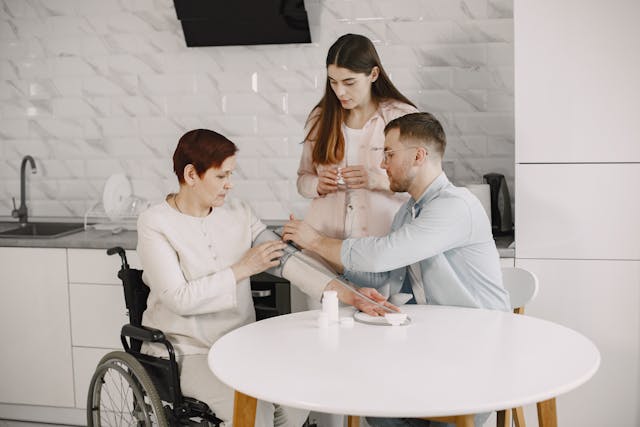
Community nursing involves clinical medical support for wound care, medication management, PEG feeding, tracheostomy care, continence management, and other complex health needs that require a qualified Registered Nurse. This care is delivered in your home, helping you manage disability related health conditions while maintaining independence.
Community Nursing Care vs Personal Care
Many people confuse these two services. Here's the critical difference:
Community Nursing Care
Who Provides It:
Registered Nurses (AHPRA registered, university trained)
What's Included:
Wound care, medication management, PEG feeding, tracheostomy care, catheter management, health assessments, chronic disease management
Personal Care
Who Provides It:
Support Workers (Certificate III/IV trained)
What's Included:
Bathing, dressing, toileting, grooming, meal preparation, household tasks, community access
Important: Community Nursing Care requires medical qualifications and clinical expertise. Our services are delivered exclusively by Registered Nurses, not support workers or unqualified staff. This ensures you receive professional medical care for complex health conditions.
Why Registered Nurses Matter
All our community nursing care is delivered by AHPRA Registered Nurses - university-trained medical professionals with clinical expertise in complex care.
AHPRA Registered Professionals
Every nurse is registered with the Australian Health Practitioner Regulation Agency, meeting strict professional standards.
University-Trained in Clinical Care
Registered Nurses complete 3+ years of university education in medical science, pharmacology, and advanced health care.
Complex Medical Procedures
Authorized to perform wound care, medication administration, PEG feeding, tracheostomy care, and other clinical tasks.
Create Care Plans & Assessments
Conduct health assessments, develop personalized care plans, and coordinate with your medical team and specialists.
What Our Registered Nurses Provide
Professional medical support for complex disability related health needs in the comfort of your home.
10 Clinical Nursing Services
Wound Care & Pressure Sore Management
Professional wound dressing, VAC dressings, pressure sore prevention, surgical wounds, diabetic ulcers.
Continence Assessment & Management
Catheter care (urinary and suprapubic), bowel programs, continence assessments, aid recommendations.
Medication Management
Medication administration, monitoring, education, Webster packs, subcutaneous injections, compliance support.
PEG Feeding & Tube Care
Enteral feeding via PEG tube, tube site care, feeding formula management, troubleshooting tube issues.
Tracheostomy Management
Trach suctioning, tube changes, site care, emergency management, ventilator support if needed.
Seizure & Epilepsy Management
Seizure monitoring, emergency medication (buccal midazolam), seizure action plans, recovery support.
Chronic Disease Management
Diabetes management, respiratory conditions (COPD, asthma), heart conditions, ongoing health monitoring.
Health Monitoring & Assessments
Vital signs monitoring (blood pressure, heart rate, temperature, oxygen), blood sugar testing, weight monitoring.
Dysphagia (Swallowing) Support
Mealtime supervision, aspiration prevention, modified texture diet support, swallowing assessments.
Post-Hospital Recovery Support
Transitional care after hospital discharge, preventing readmission, medication continuity, wound monitoring.
What NDIS Covers vs What It Doesn't
Understanding what NDIS funds versus what the health system funds helps you access the right supports.
✅ What NDIS Funds (Disability-Related Health Supports)
- ✓ Ongoing nursing care directly related to your disability
- ✓ Wound care and pressure sore prevention from disability related issues
- ✓ Continence assessment and management (catheter, bowel programs)
- ✓ Medication management and supervision for disability related needs
- ✓ PEG feeding and tube care for ongoing nutrition support
- ✓ Tracheostomy and ventilator management related to disability
- ✓ Seizure and epilepsy management as part of disability care
- ✓ Chronic disease management (diabetes, respiratory) if disability related
- ✓ Health monitoring (vitals, blood sugar, oxygen levels)
- ✓ Dysphagia (swallowing) support and aspiration prevention
- ✓ Post-hospital recovery if disability related ongoing support needed
❌ What Health System Funds (NOT NDIS)
- ✗ Hospital care and surgery - Acute medical treatment
- ✗ GP visits and Medicare services - Diagnosis and clinical treatment
- ✗ Acute illnesses - Flu, infections, one-off health issues
- ✗ One-off injuries - Broken bones, cuts requiring stitches
- ✗ Diagnosis of NEW conditions - Initial medical assessments
- ✗ Immediate post-hospital rehabilitation - First 2-4 weeks after discharge
- ✗ Time-limited palliative care - End-of-life care not related to disability
- ✗ Hospital in the Home programs - Acute post-hospital care
Who Needs Community Nursing Care?
Community nursing supports NDIS participants with complex disability related health needs that require professional medical care.
5 Common Scenarios
Complex Medical Conditions
Tracheostomy, ventilator dependence, PEG feeding, complex medication regimens requiring RN expertise.
Chronic Health Management
Diabetes requiring insulin, COPD/respiratory disease, epilepsy with frequent seizures, heart conditions needing monitoring.
Wound Care Needs
Pressure sores, surgical wounds, diabetic ulcers, VAC dressings, ongoing wound management requiring sterile technique.
Continence Support
Urinary or suprapubic catheter care, complex bowel programs, severe continence issues needing RN assessment.
Post-Hospital Transition
Preventing hospital readmission, ongoing medical needs after discharge, transitional care support.
Registered Nurse vs Enrolled Nurse vs Support Worker
Understanding who can do what helps you access the right level of care for your health needs.
Our Commitment: All Network of Care community nursing is delivered by Registered Nurses, not Enrolled Nurses or support workers. This ensures you receive the highest level of professional medical care for complex health needs.
How to Access Community Nursing Care
Getting nursing support is straightforward. Follow these simple steps.
4 Simple Steps
Check Your NDIS Plan
Look at your Capacity Building - Improved Daily Living budget. This is where disability related health supports (nursing) are funded.
Contact Us for Nursing Assessment
Call 1300 060 635 or contact us online. Our Registered Nurse will assess your health needs.
RN Creates Personalized Care Plan
Registered Nurse develops an individualized nursing care plan based on your specific medical needs and goals.
Begin Receiving Nursing Support
Start your community nursing services in your home with our Registered Nurses providing professional medical care.
Frequently Asked Questions
Find answers to common questions about NDIS community nursing care.
Why Choose Our Community Nursing Care
Professional medical support from Registered Nurses who understand complex disability related health needs.